Undergraduate Program in
Architecture
What is Architecture?
As the energy costs are getting higher, more buildings are designed to be energy-efficient buildings. Therefore, the graduates of UMN’s Architecture program do not only focus on building design as the main ability of an architect, they also have the ability to design energy-efficient buildings. The graduates have the competencies in mastering digital architecture as ICT-based architecture like making a building modeling.

Why Choose
UMN’s Architecture?
As the energy costs are getting higher, more buildings are designed to be energy-efficient buildings. Therefore, the graduates of UMN’s Architecture program do not only focus on building design as the main ability of an architect, they also have the ability to design energy-efficient buildings. The graduates have the competencies in mastering digital architecture as ICT-based architecture like making a building modeling.
FAQ
Why Choose Architecture at UMN?
Choosing Architecture as a major is not only about the ability to draw or design buildings. Amid technological developments and the growing need for more environmentally friendly buildings, prospective architects also need to understand how to design spaces that are functional, sustainable, technology-driven, and capable of addressing human needs.
So, why choose Architecture at UMN?
The Architecture Study Program at Universitas Multimedia Nusantara (UMN) offers an architectural education oriented toward Sustainable Architecture based on Information & Communication Technology (ICT). This approach is an important part of the learning process to prepare students for developments in the architecture and construction industries.
Learning Architecture Through a Sustainable Approach
One of the main focuses of Architecture at UMN is Sustainable Architecture. This approach does not only view buildings from a technical perspective but also considers three aspects: planet, people, and profit.
Students are encouraged to understand how designs can adapt to environmental contexts while creating spaces that are healthy, safe, inclusive, and supportive of users’ physical and psychological well-being.
Through this approach, students do not simply design buildings that are visually appealing but also learn to consider the impact of their designs on the environment, society, and economic aspects.
Integrating Technology into the Design Process
Another reason to choose Architecture at UMN is the integration of technology into the learning process. The curriculum is designed to equip students with various aspects of design, ranging from architectural design principles, architectural theory and history, structures and construction, building physics, utility systems, computational design, to Building Information Modeling (BIM).
The use of these technologies helps students understand the design process more effectively while preparing them for digital transformation in the construction industry.
Throughout their studies, students use various architectural software such as AutoCAD, ArchiCAD, Autodesk REVIT, SketchUp, and Rhino + Grasshopper. Various supporting tools are also used to improve design quality and analyze building performance.
Exploring Building Information Modeling (BIM)
Building Information Modeling (BIM) is one of the focus areas in Architecture at UMN. BIM enables the design process to be carried out in a more integrated and data-driven manner.
Students can learn how BIM supports the design process as well as building performance analysis, such as simulations of natural lighting, thermal comfort, energy consumption, and estimated environmental impacts.
BIM proficiency is also relevant to the needs of the construction industry, which increasingly emphasizes multidisciplinary collaboration and digital transformation. Therefore, this competency can become an important asset for students as they enter the professional world.
Learning Through Design Studios
Architecture education at UMN also has a student-centered learning approach, one of which is through architectural design studio activities.
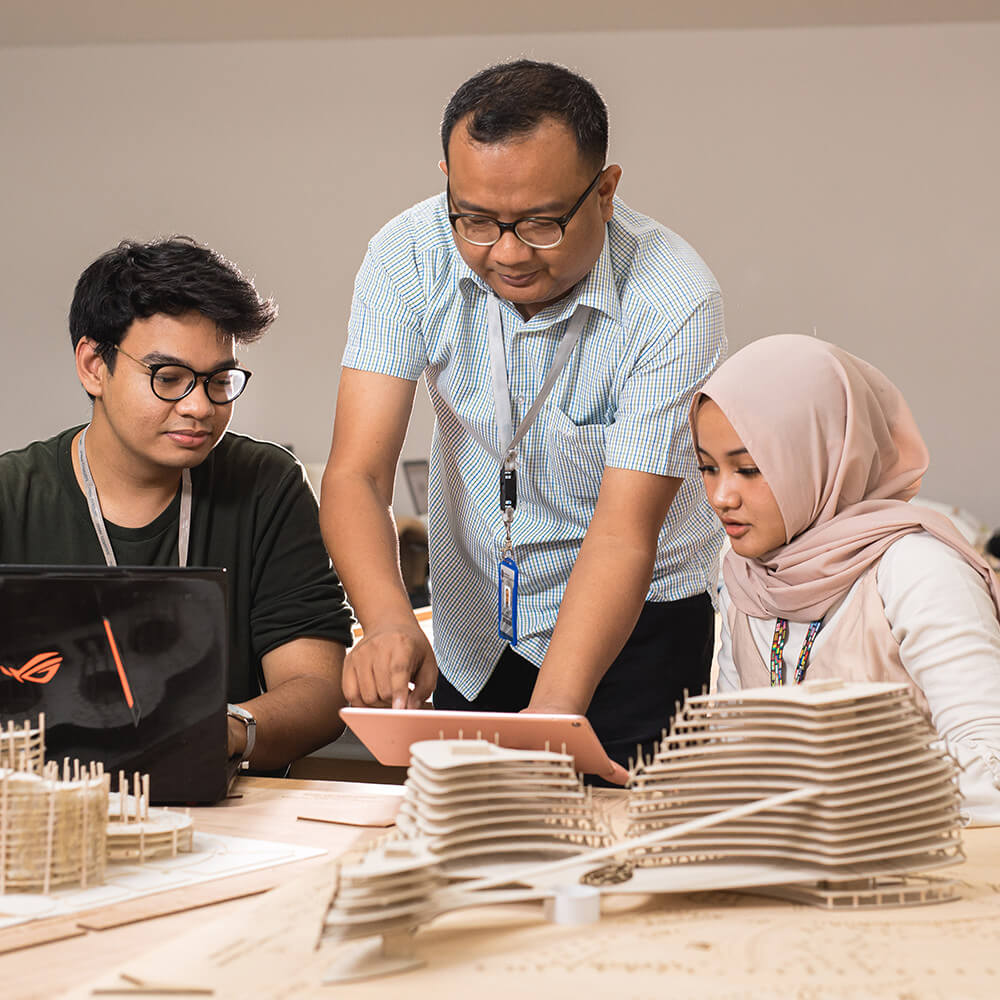
The studio serves as a space for students to apply various knowledge they have learned to the design process. Students are not only required to produce designs but also develop critical thinking, visual communication, and spatial problem-solving skills.
This approach helps students develop the ability to view a problem comprehensively and produce creative and innovative architectural solutions.
Diverse Career Prospects
Architecture UMN graduates have opportunities to pursue careers not only as Architects. The competencies developed throughout their studies can also be applied to various fields.
Some available career options include BIM Modeler/BIM Specialist, Green Building/Sustainability Consultant, Researcher/Lecturer, Interior Designer, Urban Designer/Urban Planner, Property Development Consultant, Construction Project Manager, and Architectural Entrepreneur.
This means that students can develop their careers according to the competencies and interests they build during their studies.
So, Why Choose Architecture at UMN?
Architecture at UMN can be an option for prospective students who want to study architecture through a combination of design, sustainability, and technology. Its curriculum integrates Sustainable Architecture, ICT, computational design, and BIM to equip students to meet the continuously evolving needs of the architecture and construction industries.
Through design studios with a student-centered learning approach, students also develop critical thinking, visual communication, and spatial problem-solving skills.
With a combination of sustainable architecture and technology, students are not only prepared to design buildings but also to understand how design can provide benefits for people and the environment.
If you would like to learn more about the curriculum, facilities, software used, areas of focus, or career prospects of Architecture at UMN, the UMN Education Consultant (EC) is ready to provide information according to your interests and study plans. [Contact EC Now!]
How Does the Architecture UMN Admission Process Work?
For prospective students who have chosen Architecture at Universitas Multimedia Nusantara (UMN) as their preferred study program, understanding the admission process from the beginning will make preparation easier. For the 2026/2027 Academic Year, UMN’s new student admission process is conducted online through PMB UMN, with several admission pathways that can be selected according to the prospective student’s circumstances and achievements.
Apply to Architecture UMN Online
The first step is to register through the PMB UMN website. Prospective students need to complete the registration form online and provide the required information. For the Academic Pathway, the documents that need to be prepared include photocopies of Grade X and XI report cards and two recent 4×6 cm passport-sized photos.
One important aspect to consider is the academic requirements for the Architecture Study Program. Under the admission requirements for the 2026/2027 Academic Year, Architecture is among the study programs that require grades in English, Mathematics, and supporting subjects, with a minimum subject grade of 75 or equivalent to 2.66.
This means that prospective students should prepare their academic documents while also ensuring that their grades in the required subjects meet the specified requirements.
Can I Apply Through a Scholarship Pathway?
In addition to the Academic Pathway, prospective Architecture UMN students can also consider the available scholarship pathways.
One of them is the Academic Achievement Scholarship, which provides a reduction in the admission fee based on academic achievement in Grade XI Semester 2. The amount of the admission fee discount varies depending on the ranking achieved by the prospective student. For rankings I and II, for example, a reduction of up to 100% is available, while other rankings receive reductions according to the applicable provisions.
Applicants for this pathway need to complete the registration form online and submit photocopies of Grade X and XI report cards, as well as a statement from the school principal confirming the ranking achieved in Grade XI Semester 2.
Scholarships Are Also Available for Non-Academic Achievements
Prospective students who have achievements in sports or the arts can also take advantage of the Sports and Arts Scholarship.
The requirements include having won at least third place in a provincial-level competition, either individually or as part of a team, as proven by a certificate of achievement, as well as meeting the general academic requirements. The required documents include Grade X and XI report cards, a student ID card or ID card, a statement from the school principal, competition certificates, and two recent passport-sized photos.
In addition, there are also scholarships for children of teachers/principals, children of school employees/staff, and siblings of UMN students, each with its own terms and requirements.
What Should I Prepare Before Applying?
In addition to administrative documents, prospective students should also begin familiarizing themselves with the characteristics of the Architecture Study Program at UMN. Architecture UMN focuses on Sustainable Architecture based on Information & Communication Technology (ICT).
During their studies, students will learn architectural design, structures and construction, building physics, utility systems, computational design, and Building Information Modeling (BIM). Therefore, an interest in design, technology, the environment, and problem-solving can be a good starting point before beginning their studies.
So, What Is the Admission Process?
For prospective students who have academic or non-academic achievements, do not forget to check the available scholarship pathways, as UMN provides several schemes offering admission fee reductions.
For the latest information regarding admission schedules, Architecture requirements, admission pathways, and UMN scholarships, prospective students can access the PMB UMN website or consult with an UMN Education Consultant (EC) to receive information that matches their circumstances and choice of study program. [Contact EC Now!]
What Is the Difference Between Architecture UMN’s Regular Program and International Program?
For prospective students who want to study Architecture at Universitas Multimedia Nusantara (UMN), there are Regular Program and International Program options available. So, what exactly is the difference between the two? Do students in the International Program receive a different Architecture curriculum?
To answer this, the first thing to understand is that the Architecture Study Program at UMN maintains the same academic focus, namely sustainable architecture (Sustainable Architecture) combined with information and communication technology (ICT). This program is designed to produce graduates who are creative, innovative, competent, and internationally minded.
Is the Curriculum Different?
The Architecture curriculum at UMN covers various core competencies, including architectural design, architectural theory and history, structures and construction, building physics, utilities, Building Information Modeling (BIM), as well as the development of digital skills in design.
Architecture education at UMN uses an Outcome-Based Education (OBE) approach, in which students are guided to achieve the competencies established by the study program.
Therefore, the International Program does not mean that students study a different field of architecture or have a focus that is completely separate from the Regular Program.
What Are the Distinctive Features of Architecture UMN?
Whether in a regular or international educational context, the character of Architecture at UMN lies in the combination of architecture, sustainability, and technology.
Students learn the design process through various architectural studios while gaining knowledge of sustainability, structures, construction, building physics, and BIM. The curriculum also offers elective courses such as Energy-Efficient Buildings, Digital Fabrication Design, Architectural Psychology, Lighting in Architecture, Interior Design, and Advanced BIM.
In terms of technology, students are also equipped with skills in using various architectural software, including AutoCAD, ArchiCAD, Autodesk Revit, SketchUp, and Rhino + Grasshopper.
So, What Makes the International Program Different?
The most relevant difference lies in the context of the international experience.
The official Architecture UMN website states that international students can apply to the undergraduate program, and for the International Class, the admission process is directed through the UMN International Office.
Meanwhile, an international orientation is actually already part of the overall character of the Architecture Study Program at UMN. The study program’s vision includes the goal of producing internationally minded graduates, and its learning process also uses English-language literature from various countries as well as international journals in the field of design.
This means that the Regular Program is not solely oriented toward the Indonesian architectural context. Students are still encouraged to understand developments in architecture and technology from a broader perspective.
Can Students Gain Cross-Campus Experience?
Architecture UMN has the Professional Skill Enhancement Program (PRO-STEP), which provides students with opportunities to take courses outside the department or take architecture courses at partner universities.
PRO-STEP is available to seventh-semester students and can replace 12 credits of elective courses. The program also includes options such as the Career Acceleration Program, Community Engagement Program, and Road to Champion Program.
This gives students opportunities to broaden their learning experience without having to rely on the International Program as the only pathway to gain a broader perspective.
So, Which One Should You Choose?
If the main goal of a prospective student is to receive an Architecture education focused on Sustainable Architecture and technology, both options remain within the academic ecosystem of Architecture UMN.
The Regular Program can be an option for prospective students who follow UMN’s general study pathway. Meanwhile, the International Program is more suitable for students who want an international classroom context and an academic experience that is more oriented toward an international student environment.
Most importantly, do not choose the International Program simply because you assume that its curriculum is automatically more advanced. The strengths of Architecture UMN in sustainability, ICT, and BIM remain important parts of Architecture education.
Ultimately, the choice can be adjusted according to educational goals, the need for international experience, and the desired learning environment.
If you would like to learn more about the admission pathways, curriculum, tuition fees, or International Class options for Architecture UMN, prospective students can consult with an UMN Education Consultant (EC) before deciding on the program that best suits their needs.
What Do Students Learn in Architecture UMN?
For prospective students interested in Architecture, the question “what do students learn?” is important to answer before choosing a study program. Architecture is not only about drawing buildings or creating attractive designs. Students also need to understand structures, construction, the environment, technology, and how a building can have a positive impact on its users and the environment.
In the Architecture Study Program at Universitas Multimedia Nusantara (UMN), learning focuses primarily on Sustainable Architecture based on Information & Communication Technology (ICT). This undergraduate program has a minimum study load of 144 credits over eight semesters or four years.
Learning the Fundamentals of Architectural Design
In the early stages, students learn the fundamentals that form the foundation of architectural design, including 2D and 3D forms and design, architectural composition, aesthetics, as well as design processes and methods.
Students also study architectural theory and history, including the history and culture of local and global architecture. This understanding helps students see design not only as a visual matter, but also as part of a social, cultural, and environmental context. (ARS UMM)
Learning is then developed through architectural design studios. In the studio, students can create sketches, develop drawings, conduct field observations, conduct research, as well as discuss and develop designs together. (ARS UMM)
Sustainable Architecture as the Main Focus
One of the characteristics of Architecture UMN is its focus on Sustainable Architecture. Students not only learn how to design buildings, but also how designs can respond to environmental issues and improve the quality of the built environment.
The learning materials cover building and environmental science, including an understanding of building physics. Students are encouraged to consider sustainability aspects throughout the design process, such as energy efficiency and building performance.
Even in their final projects, students are required to address an object with specific issues and urgency, consider environmental and sustainability issues, and apply or examine green architecture principles.
Learning About Structures, Construction, and Building Systems
Being an Architecture student also means understanding how a building can be technically realized. Therefore, students study structures, materials, construction, and building utility systems.
An understanding of climate, geotechnical conditions, and their impact on design and construction is also part of the competencies developed. In this way, designs are not only visually appealing but also consider technical and functional aspects.
UMN also has the Architecture Material Archiving, where students can learn about material characteristics, product dimensions, and material innovations used in building design.
Architecture Integrated with Digital Technology
What distinguishes the Architecture UMN learning experience is the strong integration of ICT and digital thinking into the design process.
Students learn Building Information Modeling (BIM) and digital technologies to support the design process. The competencies developed are not limited to creating models, but also include using technology to communicate architectural ideas effectively.
At the BIM Architectural Laboratory, students are introduced to digital design, 3D model simulation, parametric design, and BIM. The laboratory is equipped with computers that support various architectural applications such as Revit, AutoCAD, ArchiCAD, SketchUp, Rhino, and Twinmotion, as well as Adobe software.
Understanding Cities, Communities, and the Industry
Architecture cannot be separated from the context of cities and communities. Therefore, students study urban, social, cultural, economic, and policy aspects related to urban planning and architectural design. (ARS UMM)
In addition to design skills, students are also equipped with an understanding of the construction and development industries, architectural professional ethics, the role of architects, business principles, project management, and architectural service procurement. (ARS UMM)
Opportunities to Expand Competencies
Students can also participate in the Professional Skill Enhancement Program (PRO-STEP). This program allows students to take courses outside their department as well as architecture courses at partner universities. PRO-STEP includes options such as the Career Acceleration Program, Community Engagement Program, and Road to Champion Program.
Therefore, learning in Architecture UMN goes beyond the ability to design buildings. Students also develop critical thinking, visual communication, digital competence, sustainability, cross-disciplinary collaboration, and entrepreneurial thinking.
So, What Do Students Learn in Architecture UMN?
In summary, Architecture UMN combines design, technology, and sustainability. Students study architectural design, theory and history, structures and construction, materials, building physics, utilities, urban studies, sustainability, BIM, as well as professional and business aspects of architecture.
This approach is aimed at producing graduates who are creative, innovative, competent, capable of using digital technology, and equipped with a global perspective.
So, if you are looking for an Architecture program that not only teaches “how to design buildings,” but also how to design buildings that are sustainable, data-driven, and relevant to technological developments, Architecture UMN can be one of the options to consider.
To learn more about the curriculum, studios, facilities, software, and academic experience in Architecture UMN, prospective students can consult with an Education Consultant (EC) UMN before choosing a study program. [Contact EC Now!]
What Are the Career Prospects for Architecture UMN Graduates?
Choosing Architecture is certainly not only about learning how to design buildings. Prospective students also need to consider where these competencies can take them after graduation. Moreover, the development of digital technology and the growing need for more sustainable buildings continue to expand career opportunities in the field of architecture.
The Architecture Study Program at Universitas Multimedia Nusantara (UMN) prepares students with a focus on Sustainable Architecture based on Information & Communication Technology (ICT). This approach means that graduate competencies are not limited to design, but also include technology, the environment, and industry needs.
What Can Architecture UMN Graduates Do?
One of the main career prospects is, of course, becoming an Architect. During their studies, students develop design skills through architectural studios while also learning about design theory, structures, construction, materials, utilities, and environmental aspects.
However, career options for Architecture UMN graduates are not limited to becoming architects. The competencies developed can also be applied to various fields, such as BIM Modeler/BIM Specialist, Green Building or Sustainability Consultant, Interior Designer, Urban Designer/Urban Planner, Property Development Consultant, Construction Project Manager, Researcher/Lecturer, and Architectural Entrepreneur.
The official Architecture UMN website also lists several other career opportunities, including Developer and Contractor, demonstrating that architectural competencies can be applied across various areas within the development ecosystem.
Why Is BIM an Important Career Skill?
One of the competencies that characterizes Architecture UMN is Building Information Modeling (BIM).
BIM enables the design process to be carried out digitally and based on information. At UMN, students are introduced to digital design, 3D model simulation, parametric design, and BIM through the Building Information Modeling (BIM) Architectural Laboratory.
This competency is relevant to the needs of an increasingly digitalized construction industry. Students not only learn to produce building visualizations, but also understand how technology can be used in the design and development process of buildings.
Therefore, graduates with BIM skills can develop careers not only as architects, but also as BIM Modelers or BIM Specialists.
Opportunities in Green Building and Sustainability
The focus on Sustainable Architecture also opens up career paths that are increasingly relevant to industry needs.
Architecture UMN equips students with an understanding of sustainability principles, building science, and the environment. Students are encouraged to understand how designs can produce more efficient buildings while also responding to environmental issues.
These competencies can be developed into careers as Green Building Consultants or Sustainability Consultants.
Thus, students are not only prepared to design buildings, but can also contribute to efforts to create a more sustainable built environment.
Learning Experiences That Support Career Readiness
Career prospects are certainly not determined solely by the name of a study program. Experiences gained during university also play an important role in building professional readiness.
Architecture UMN uses an Outcome-Based Education (OBE) approach. Students are encouraged to master competencies in design, cultural and arts studies, social studies, environmental studies, technical aspects, professional practice, and skills required in architectural practice.
Architectural studios serve as one of the main spaces for developing these abilities. Students can create sketches, develop drawings, conduct field observations, conduct research, as well as discuss and develop designs together.
The curriculum also develops logical, critical, systematic, and innovative thinking skills, including the ability to make decisions based on data analysis and communicate architectural ideas through various media.
Not Only Prepared to Become Employees
Interestingly, Architecture UMN also places emphasis on an entrepreneurial spirit. The study program’s vision includes developing graduates with an entrepreneurial mindset who are capable of becoming independent professionals.
This means that graduates have opportunities to build careers by establishing their own architecture firms, developing businesses in design and construction, or creating services related to technology and sustainability.
Alumni experiences also demonstrate diverse career paths. On the official Architecture UMN website, for example, there are alumni who have pursued careers as Junior Architects at Atelier Riri, as well as alumni who have become Co-Founder/Principal Designer at Atelier TEN+ while also working as Head of Content Division at ORBITGear.
So, What Are the Career Prospects?
The career prospects for Architecture UMN graduates are quite diverse because the competencies developed are not limited to building design skills. Students are also equipped with sustainability, digital technology, BIM, environmental understanding, communication skills, as well as professional and entrepreneurial competencies.
Therefore, after graduation, students can develop careers as Architects, BIM Specialists, Sustainability Consultants, Interior Designers, Urban Designers/Planners, Property Development Consultants, Construction Project Managers, Researchers/Lecturers, Contractors, and Architectural Entrepreneurs.
For prospective students who want to pursue a career in architecture while also being interested in technology and sustainable design, the Architecture UMN approach can provide valuable preparation for the increasingly digital and sustainability-oriented architecture and construction industry.
To learn more about the curriculum, facilities, BIM, sustainability, student experiences, and career paths of Architecture UMN graduates, prospective students can consult with an Education Consultant (EC) UMN to align their study choices with their career goals. [Contact EC Now!]
ECTS Points Table
| ECTS Points | 146 SKS |
| Education Type | Bachelor Program |
| Duration | 4 years |
| Language | Bahasa Indonesia |
| Bachelor's Degree | Bachelor of Architecture |
Vision & Mission
Vision
To become an outstanding undergraduate program in Architecture that produces graduates who are creative, innovative, competent, and internationally minded in ICT-based Architecture and have entrepreneurial spirit and noble character.
Mission
To conduct ICT-based architecture learning process supported by qualified lecturers and up-to-date curriculum that promotes the link and match with industry; to conduct research in ICT-based architecture that gives contribution to improve sustainable quality of buildings; and to conduct society services programs in ICT-based architecture.
Career Prospect
- Architect
- Interior Designer
- Urban Designer
- Developer
- Green Building Consultant
- Real Estate Contractor
- Architecture Writer
Further Study
Graduates of Architecture Study Program can continue their studies in the field of architecture or professions related to architecture (construction, property development, project management). They can become Green Building sustainability experts, researchers, technopreneurs / entrepreneurs or work in academics.
Learning Attainment
Preparing students to become architecture scholars who master the concept of theory related to architecture and communication information technology (ICT) that can support the architectural planning process by upholding moral values, ethics, and respect towards the surrounding environment, and are able to communicate the results of thinking and design in the form of graphics or writing both manually and digitally.
Graduate Profile
Graduates are expected to become architecture scholars who have the ability to design by understanding the needs of every human space, can appreciate the sustainability of the environment and natural resources, and have ICT-based capabilities such as mastering variety of software related to current design needs.
Curriculum
UMN’s architecture students will learn about the theory, practice and architectural studio design during their studies in UMN Architecture Study Program. In general, the UMN Architecture curriculum can be described as follows.
Year 1: students will acquire the basic understanding of architecture related to theory, history, structure and construction, as well as fine arts. In addition, students will also be introduced to the communication techniques in architecture. In the 1st year students will start getting familiar with architectural studio design. Here students begin to design simple architectural buildings.
Year 2: students will learn further about architectural studio design equipped with knowledge of sustainability towards the environment. Not only that, students will be introduced to the form of digital communication from architecture.
Year 3: students will get a deeper understanding of Building Information Modeling and architectural studio design. In the 3rd year students are also given knowledge of management projects and multimedia forms of architecture. In addition, students will be introduced to the Creative Business.
Year 4: students will complete an internship at service bureaus or architectural consultants’ offices. The 4th year will also serve as a preparatory year for their final project.
Entry Requirement
- Graduated from Senior High Schools – Natural Science Program
- Graduated from Vocational High Schools in Engineering.
Partnership & Collaborations
UMN Architecture study program has cooperated with several associations, by becoming a member of associations such as APTARI (Association of Higher Education Architecture of Indonesia) and IAI (Indonesian Architectural Association) to support teaching and learning activities in the field of architecture.
Why Choose
UMN’s Architecture?
As the energy costs are getting higher, more buildings are designed to be energy-efficient buildings. Therefore, the graduates of UMN’s Architecture program do not only focus on building design as the main ability of an architect, they also have the ability to design energy-efficient buildings. The graduates have the competencies in mastering digital architecture as ICT-based architecture like making a building modeling.
ECTS Points Table
| ECTS Points | 146 SKS |
| Education Type | Bachelor Program |
| Duration | 4 years |
| Language | Bahasa Indonesia |
| Bachelor's Degree | Bachelor of Architecture |
Career Prospect
- Architect
- Interior Designer
- Urban Designer
- Developer
- Green Building Consultant
- Real Estate Contractor
- Architecture Writer
Further Study
Graduates of Architecture Study Program can continue their studies in the field of architecture or professions related to architecture (construction, property development, project management). They can become Green Building sustainability experts, researchers, technopreneurs / entrepreneurs or work in academics.
Student Scholarship
UMN scholarship program is offered to high school students in 12th grade who have academic, sports, and artistic achievements while in 11th grade. In addition, UMN also offers the program to high school/vocational school students who won medals in the National and International Science Olympics. As a form of appreciation for the dedication of teachers and employees/ staff in educating the nation's children, UMN provides scholarships in the form of a 50% reduction in fees for teachers/principals and a 30% reduction in fees for children of the employees/staff in high schools/vocational schools (both public and private) who want to continue their education at UMN.
Entry Requirement
- Graduated from Senior High Schools – Natural Science Program
- Graduated from Vocational High Schools in Engineering.
Students are required to attend academic guidance meetings at least 3 times per semester. The schedule of the meetings will be provided by the respective academic supervisors. Students have to bring the academic guidance book for the meeting and they need to make sure that the academic supervisor signs it.
Continuing Education Department (CED) adalah program pengembangan pendidikan di Universitas Multimedia Nusantara (UMN) yang merupakan bagian dari Grup Kompas Gramedia. Kami memiliki berbagai program dalam kursus bahasa, pengembangan manusia, Pusat Pengujian untuk sertifikasi nasional dan internasional, dan program pelatihan. CED UMN dirancang untuk memenuhi kebutuhan siswa sekolah menengah dan perguruan tinggi, serta masyarakat dan profesional.
Students are encouraged to find their own companies / agencies for their internships that align with the focus of the Architecture Study Program i.e. Industrial Automation. Information about available internships can be obtained from other students, social media, job fairs, advertisements in print or electronic media or even through the UMN Career Development Center (CDC).
To complete the Undergraduate Program (S-1) at Multimedia Nusantara University, students must prepare, present, and defend the thesis in front of the thesis examination board, in accordance with the provisions of the study program. The preparation of the thesis is done individually and the students can choose the supervisor directly provided that the selected supervisor agrees.
In connection with the New Normal regulations, UMN implements its teaching system in accordance with the Press Release of the Ministry of Education and Culture of the Republic of Indonesia Number 137/sipers/A6/VI/2020 concerning Guidelines for The Implementation of Learning in the School Year and New Academic Year during the COVID-19 Pandemic, Chapter of the Learning System in the Higher Education Environment.






To support the learning process, umn provided a complete and sophisticated college facility, according to industrial standards. Through the existence of the facility, students have been invited to be close to the industrial world since sitting in college and to have competence that matches the needs of the industry. That way, it will make it easier for umn students to find jobs, even before graduation.

This laboratory facilitates UMN students to print their work using 3 mechanical engine units that […]

A laboratory equipped with technological tools that can help students hold discussions and design concepts. […]

UMN is committed to advancing digital and online learning as an integral part of its […]

This modern theater hall has a capacity of up to 200 people. This room is […]

With the extent of modern interior designs, tens of thousands of local and international reading […]

Every UMN student holds an account to log in to the MYUMN application that provides […]
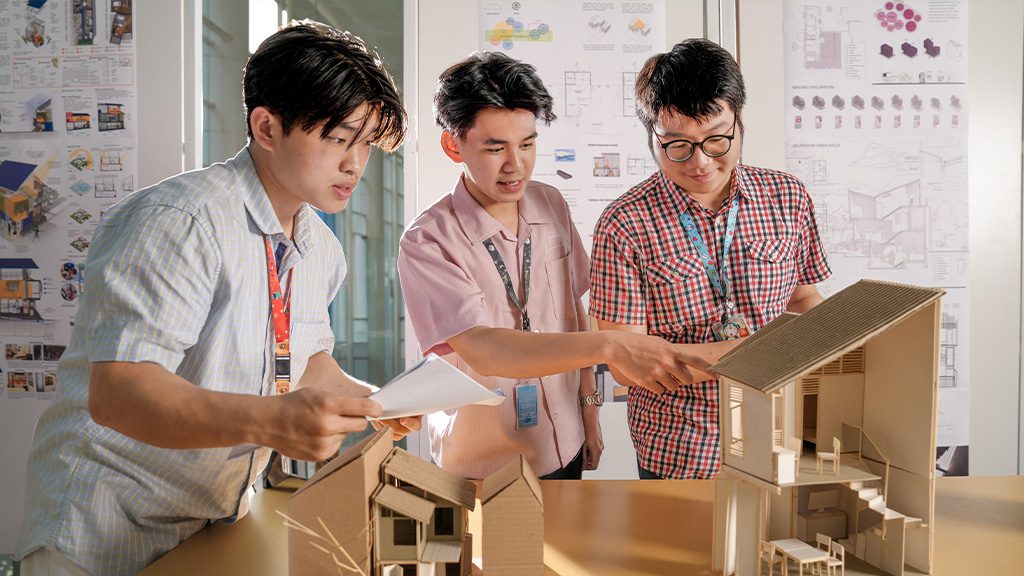
This studio is a workspace for students whom is enrolled in the Architecture study programs. […]

UMN’s Wi-Fi has a free flow system where UMN students are not charged with cellular […]
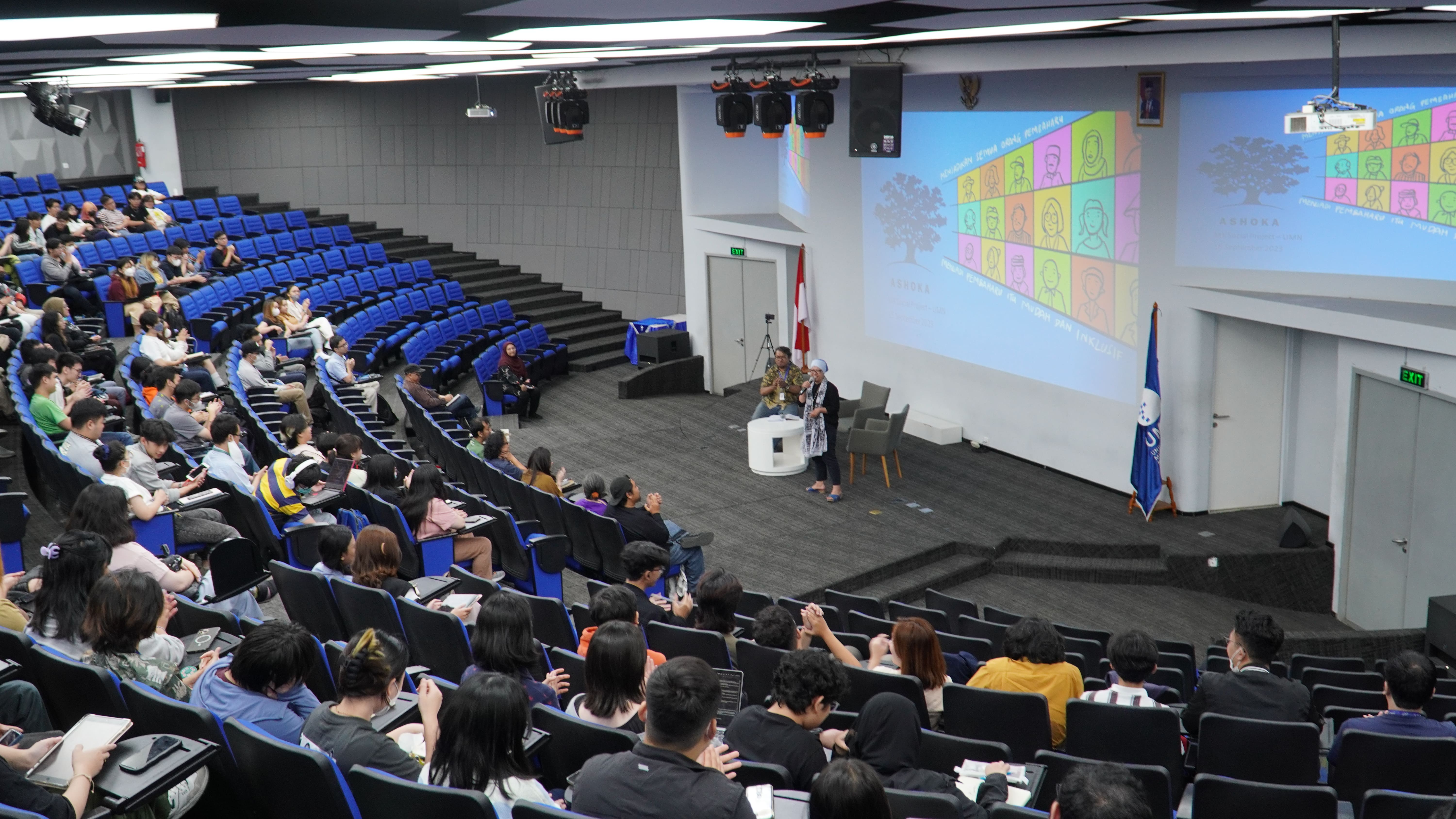
With a larger capacity compared to the other halls, the Lecture Theatre can accommodate up […]

UMN became the first campus established by Kompas Corner. Here, UMN students can access information […]
Extracurricular Student Activities
In order to help students explore and develop their non-academic potentials, UMN also provides a variety of extra-curricular activities for students which is locally called UKM, Student Activity Unit.

Student who are Nature Lovers in University Multimedia Nusantara can join and participate in UMN’s […]

Ultima Sonora is the Universitas Multimedia Nusantara Choir ensemble which has been established since 2007. […]

UMN Symphony Orchestra (USO), is one of the arts and culture UKM at UMN. As […]

Traditional Music and Dance or familiarly known as TRACCE is one of the Student Activity […]

Qorie is one of the many Student Activity Units at Universitas Multimedia Nusantara that has […]
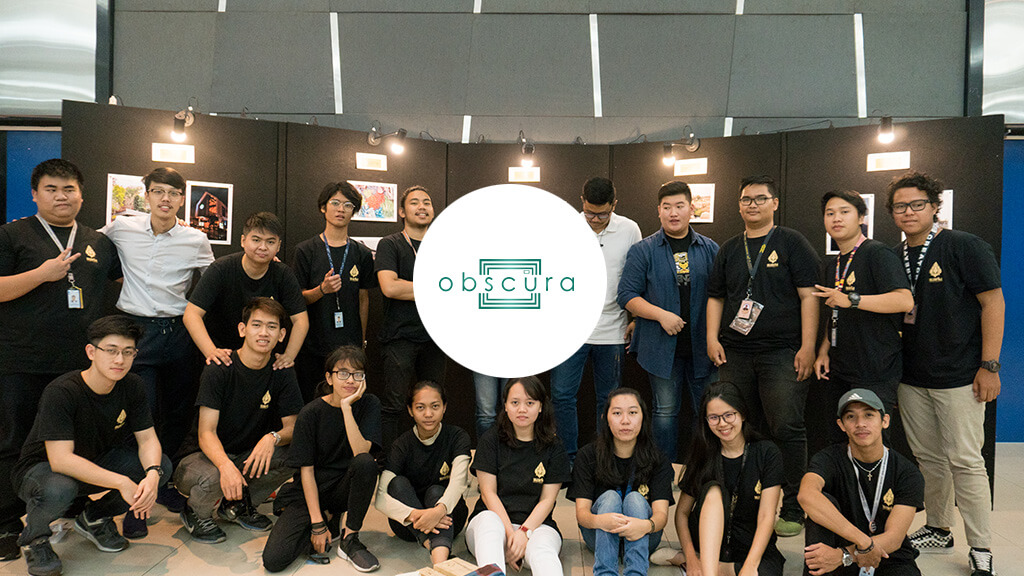
Obscura is a Student Activity Unit (UKM) engaged in photography under the auspices of Universitas […]

SEE OTHER
UMN’S STUDENT ACTIVITIES
Rekapitulasi Penelitian Hibah DIKTI - Arsitektur
Rekapitulasi Penelitian Internal - Arsitektur
Daftar Kegiatan PKM Dosen
Rekapitulasi Inovasi Hak Cipta - Arsitektur
CERTIFICATION
Green Building Training
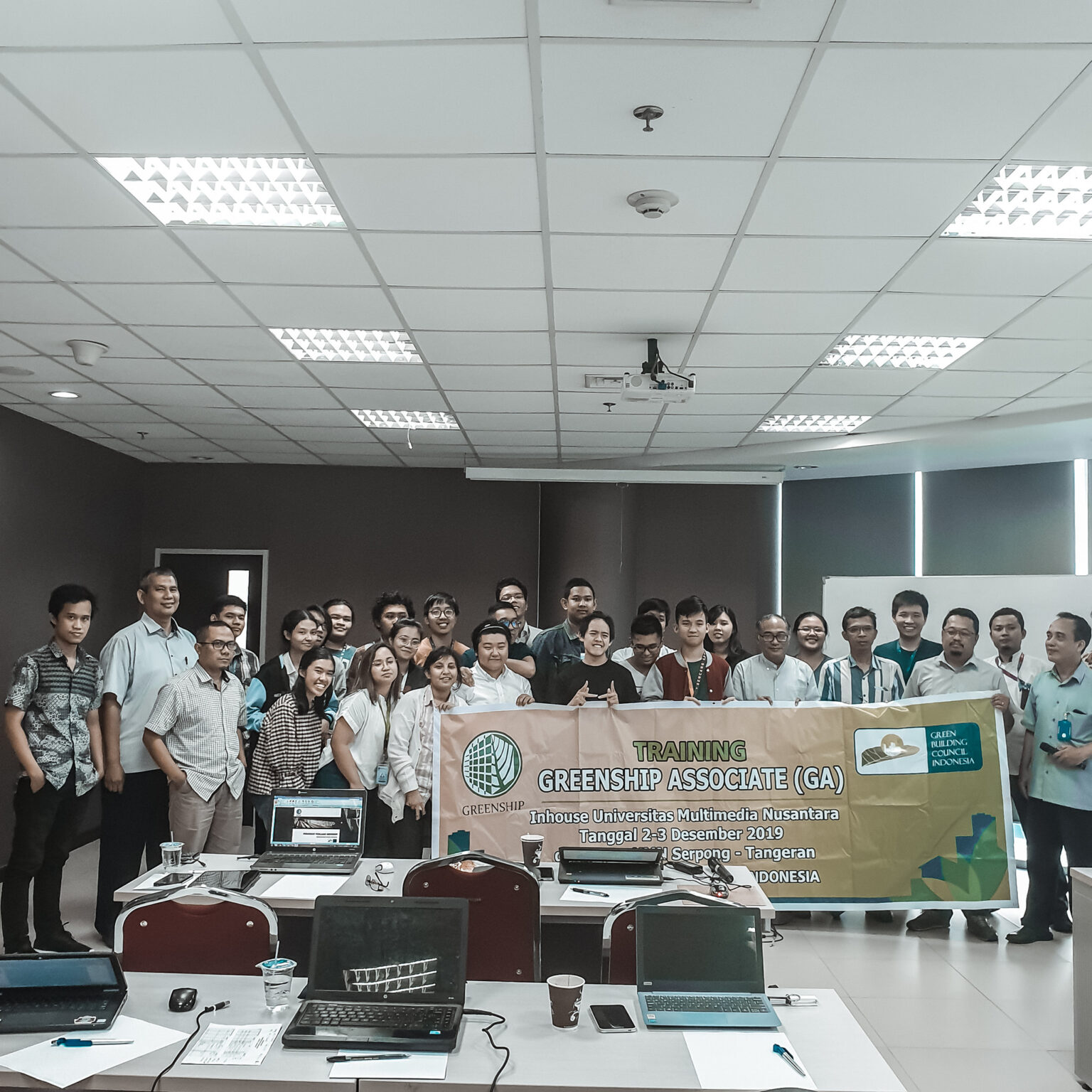



UMN collaborates with Green Building Council Indonesia (GBCI) to conduct Greenship Associate training and certification at UMN every beginning of December. This training is a facility for UMN Physics Engineering students as well as the outside community to gain learning experience and also certification in the field of green building. For further information on this training, please contact ced[at]umn.ac.id.
Information Literacy
Information literacy is an ability that individuals have in determining, searching, managing and evaluating information effectively and efficiently. This training is open to UMN active students. For further information, please contact: library.umn.ac.id
“Architecture lectures at UMN are very exciting because we are guided by people who are experts in their field and do not only learn the theory but also get a lot of hands-on practice. The facilities provided to support lectures are also complete, such as the architecture studio that is open 24 hours, adequate computer lab, material lab, and many more.”
Stephanie Vania
Mahasiswi Arsitektur 2017
Architecture
Dalam Program Studi Arsitektur Universitas Multimedia Nusantara, mahasiswa akan belajar berbagai teknik menggambar dan dasar-dasar estetika sebagai inti dalam perancangan arsitektur. Untuk melengkapi kemampuan tersebut, mahasiswa juga belajar mengenai prinsip dasar keberlanjutan, yang merupakan salah satu bidang unggulan yang ditawarkan oleh program studi Arsitektur Universitas Multimedia Nusantara. Fokus universitas akan kelestarian lingkungan dituangkan ke dalam mata kuliah secara sustainable dan Fisika Bangunan yang mengasah kepekaan seorang arsitek akan pentingnya arsitektur hijau.
Hedista Rani Pranata, S.Ars., M.Ars. – Ketua Program Studi Arsitektur